


Insights from the team at Elevation Health in West Jefferson, NC

Testosterone replacement therapy has become one of the most talked-about topics in men’s health — and for good reason. Low testosterone is far more common than most men realize, and it’s frequently missed. At Elevation Health in downtown West Jefferson, the team of Maggi Birdsell, Heather Peters, and Dr. George Fleming helps men understand what low testosterone really looks like, when testosterone therapy makes sense, and how to get lasting results. Want to learn more in person? They’re hosting a free men’s health seminar on Thursday, June 25, 2026, in West Jefferson. Here’s what they want every man to know.
What Is Low Testosterone — and Why It’s So Often Missed
Many men assume that feeling tired, foggy, or simply “off” is just part of getting older. The team at Elevation Health calls it the “male funk” — you go to work, do your job, come home, and collapse in a chair while the to-do list gets thrown out the window. The good news? You don’t have to accept it as inevitable.
Low testosterone is highly prevalent and very treatable, yet it’s routinely overlooked — especially in men in their late 30s and 40s who still feel relatively healthy. Recognizing the symptoms early is the first step toward low T treatment that actually works.
Symptoms of Low Testosterone to Watch For
These are symptoms of low testosterone — not the same thing as erectile dysfunction, though low T can contribute to it. Common signs include:
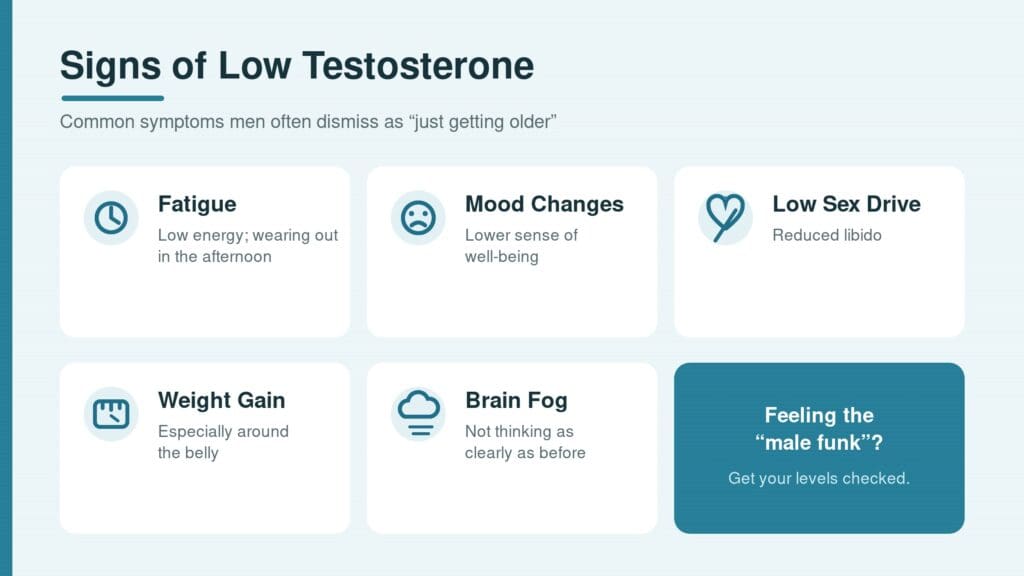
- Persistent fatigue and low energy, especially wearing out in the afternoon
- Mood changes and lower overall sense of well-being
- Reduced sex drive
- Weight gain, particularly around the belly, and other body composition changes
- Brain fog — not thinking as clearly as you used to
- No longer being able to keep up with chores or activities you once handled easily
There are also clinical and lab signs a provider can identify. If these symptoms sound familiar, it’s worth getting your testosterone checked — but men have to take that first step and book an appointment. The condition is becoming more common, and it’s something the right care can change.
Do Testosterone Supplements and “Boosters” Actually Work?
You’ve seen the ads everywhere — over-the-counter pills and testosterone boosters promising to fix low T. The honest answer from Elevation Health: those products are largely making companies money while doing little for you. One product even slipped a small amount of Viagra into its pills to seem effective — and got caught by the FDA. Real testosterone replacement therapy is different from a supplement off the shelf. It uses your body’s own form of testosterone, dosed and monitored by a clinician based on your individual labs.
Testosterone Therapy Options: Shots, Pellets, and Creams
At Elevation Health, testosterone replacement therapy is delivered in several forms so treatment can be tailored to the individual:
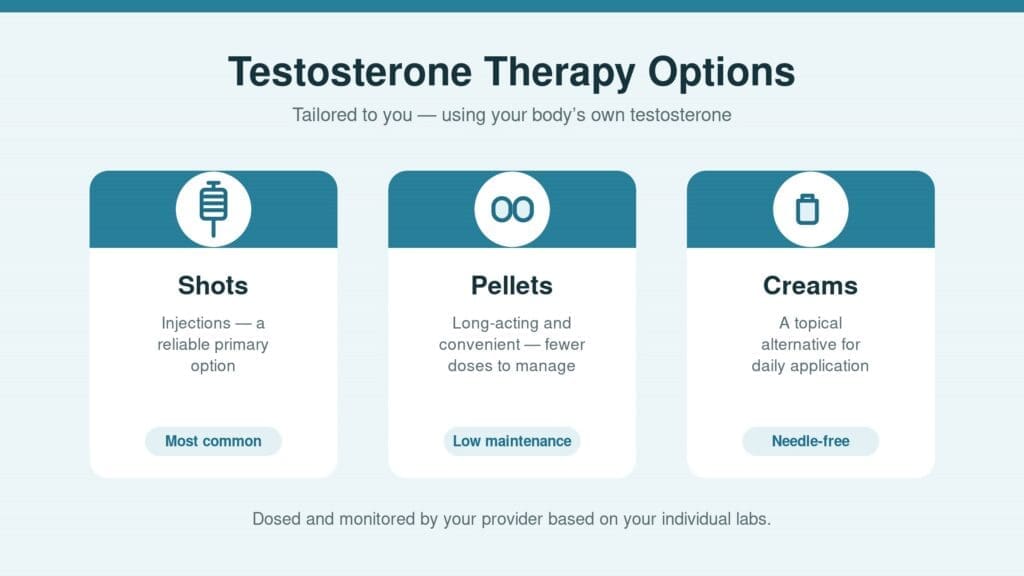
- Testosterone shots (injections) — a primary, reliable option
- Pellets — long-acting and convenient
- Creams — a topical alternative
Oral testosterone pills are generally not preferred. Whatever the form, the goal is to restore testosterone to a healthy, optimized level — not to turn you into “the Hulk.” Therapy helps you reach your own potential, feel stronger, and — just as importantly — feel good again. It was never only about looking bulky.
Why Testosterone Therapy Isn’t One-Size-Fits-All
If you’re already on testosterone therapy but feel an up-and-down cycle — a slump, fatigue, and low energy before your next dose is due — your hormones may not be fully optimized. A 42-year-old and a 60-year-old won’t need the same dose or the same frequency. Effective low T treatment is built around your individual labs and your individual response.
That’s also why it takes patience. Most men notice results within about two months, but fully dialing in the right regimen can take six months to a year — and occasionally up to two years. It isn’t magic, but the payoff is real.
Elevation Health also looks at the bigger hormonal picture, including thyroid and DHEA, to make sure your whole system is supported — not just your testosterone number.
Lifestyle Matters: How Diet and Exercise Affect Testosterone
Here’s the part Elevation Health won’t sugarcoat: you can’t just replace your testosterone and keep eating like trash. You get out what you put in. To improve your clinical markers — blood sugar, insulin resistance, cholesterol and testosterone — lifestyle has to be part of the plan.
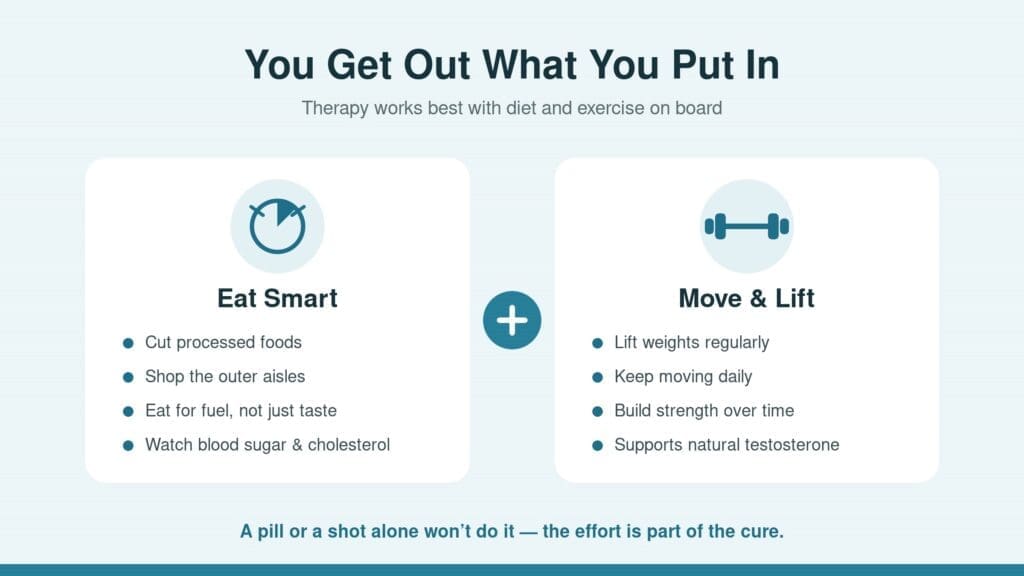
- Cut processed foods. A useful rule of thumb: foods around the outer edges of the grocery store tend to be good for you, while the boxed, processed items in the inner aisles are the ones to avoid.
- Lift weights and keep moving. Exercise directly supports healthy testosterone levels.
- Eat for fuel, not just for taste. Treat food as nourishment first.
Pairing testosterone replacement therapy with smart nutrition and regular strength training is what turns good lab numbers into how you actually feel day to day.
Men’s Health Seminar — Thursday, June 25, 2026 in West Jefferson
Elevation Health is hosting a men-only health seminar on Thursday, June 25, 2026, covering low testosterone symptoms, the clinical signs, and how to figure out whether testosterone therapy is right for you. It runs about one hour, starting at 5:30 p.m., at the Burley Market — just down the street from the Elevation Health office in downtown West Jefferson, in their conference-room space.
Attending doesn’t mean admitting to any symptoms — it simply means you want to learn more about your health and what to expect from your body over the coming decades. Even younger men with no symptoms benefit from understanding the road ahead. Wives and partners: feel free to nudge the men in your life to come listen, no strings attached.
How to Reserve Your Spot
- Text: (336) 920-8331 to secure your spot
- Call: (336) 646-7442
- Walk in: You’re welcome to simply show up
Spots for the June 25, 2026 seminar are limited, so reserve early. Flyers and details are also posted on Elevation Health’s website and social media. Take the first step toward feeling like yourself again — your health is worth it.
This article is for educational purposes and is not a substitute for personalized medical advice. Talk with the providers at Elevation Health to determine whether testosterone replacement therapy is appropriate for you.


+ show Comments
- Hide Comments
add a comment